
Building a Shopify Store That Converts: Development, Design, and Customization
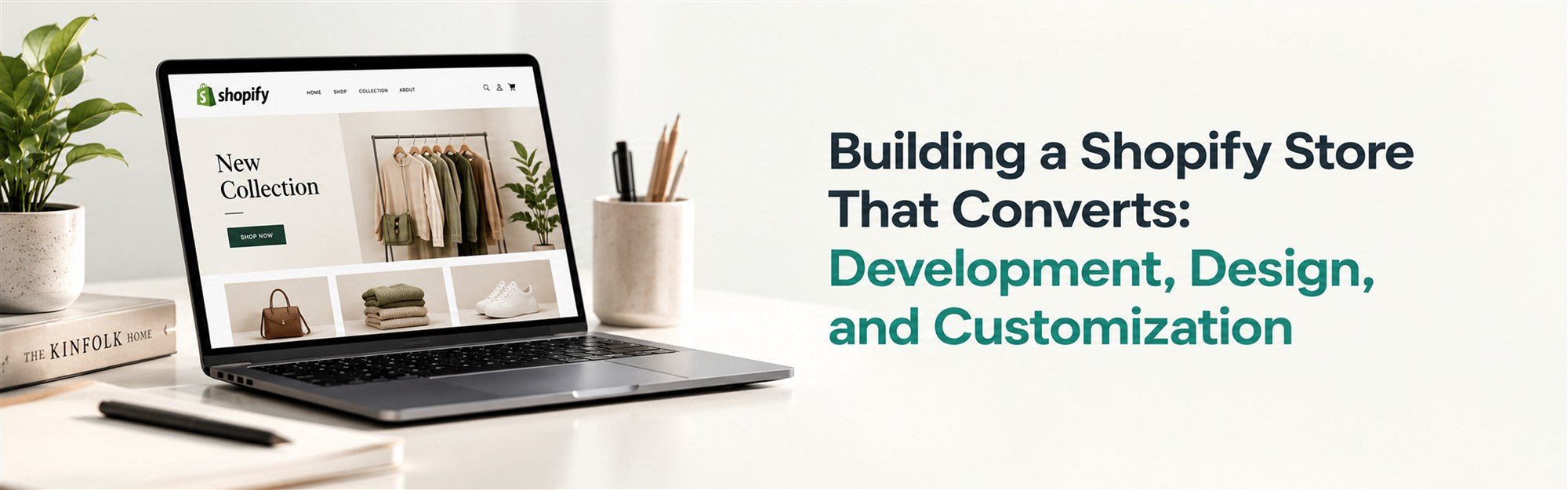
A Shopify store is often the first real interaction a customer has with a brand, and first impressions in eCommerce happen fast. Within seconds, a visitor decides whether a store feels trustworthy, easy to navigate, and worth their time. That decision isn't shaped by a single factor; it's the combination of design, functionality, performance, and user experience working together.
This is why Shopify store development has become such an important investment for entrepreneurs, startups, and established retailers alike. A store built on a generic template might launch faster, but it rarely reflects the specific needs of a growing business. Thoughtful development and Shopify theme customization allow a brand to shape an online store around its products, its customers, and its long-term goals, rather than working around the limitations of an out-of-the-box setup.
Whether you're launching your first store or rethinking an existing one, understanding what goes into a well-built Shopify store can help you make better decisions, and ask better questions when evaluating a development partner.
What Is Shopify Store Development?
Shopify store development refers to the process of building, configuring, and refining a Shopify store so it functions the way a specific business needs it to. It goes beyond simply picking a theme and adding products.
The process typically includes:
- Setting up the store structure, including collections, product categories, and navigation
- Selecting and configuring a theme that fits the brand
- Building custom features or sections not available by default
- Integrating third-party tools such as payment gateways, shipping apps, and marketing platforms
- Optimizing site speed and mobile responsiveness
- Testing the store across devices and browsers before launch
- Preparing the store for ongoing updates and maintenance
Some businesses need a fully custom build from the ground up, while others need targeted improvements to an existing store. Either way, development work is what turns a basic Shopify setup into a functional, reliable sales channel.
Key Elements of a Successful Shopify Store
Not every store needs the same features, but most successful Shopify stores share a common foundation:
- Responsive design that adapts smoothly across desktops, tablets, and smartphones
- Easy navigation that helps shoppers find products without confusion
- Logical product organization, including well-structured collections and categories
- Fast-loading pages, since slow load times often lead to abandoned visits
- Secure checkout, which builds trust and reduces cart abandonment
- Mobile-friendly shopping, given how much traffic now comes from phones
- Reliable payment integration covering the payment methods customers expect
- Search and filtering tools that help shoppers narrow down large catalogs
- Customer-focused UX, where every page is designed around how real shoppers browse and buy
These elements work together. A beautifully designed store with slow load times, or a fast store with confusing navigation, will still struggle to convert visitors into customers.
Shopify Theme Customization: Creating a Unique Store Experience
Every Shopify theme starts as a template, a starting point built to work for a wide range of businesses. Shopify theme customization is the process of adapting that starting point into something that actually reflects a specific brand.
This can involve adjusting layouts, color schemes, and typography, but it often goes deeper than surface-level styling. Customization can include redesigning product pages, building custom homepage sections, adjusting navigation menus, or modifying how collections and filters behave.
The difference between using a theme as-is and customizing it comes down to fit. A standard theme might work well enough at launch, but as a business grows, its needs often outgrow the default configuration. A brand selling made-to-order furniture, for example, has very different page requirements than a brand selling digital downloads. Customization allows the store to match the actual shopping experience the business wants to offer, rather than forcing the business to adapt to generic theme limitations.
Shopify Store for Fashion and Apparel Brands
A Shopify store for fashion and apparel typically has different requirements than a general eCommerce store, largely because clothing and accessories are highly visual, size-dependent products.
Some of the considerations that matter most for fashion and apparel stores include:
- High-quality product imagery, since customers rely heavily on visuals to judge fit, fabric, and style
- Product variants for size, color, and material, presented clearly on the product page
- Size guides that help reduce uncertainty and returns
- Well-organized collection pages that make it easy to browse by category, season, or style
- Product filtering, so shoppers can narrow results by size, price, or color
- Mobile shopping support, since a large share of fashion browsing happens on phones
- Wishlist functionality, which supports customers who browse before they buy
- Customer reviews, which help build confidence in fit and quality
- Promotional campaign support, for seasonal sales and new collection launches
- Simple, friction-free checkout, especially important for stores with frequent repeat purchases
When these elements are designed thoughtfully, the shopping journey feels smoother. A customer can move from browsing a collection to selecting a size to completing checkout without unnecessary friction, which matters more in fashion than in almost any other product category.
Finding Shopify Developers Near You
When businesses search for Shopify developers near me, the underlying goal is usually finding a partner who understands both the technical and business side of running a store. Location can matter for some businesses, particularly those who prefer in-person meetings, but it shouldn't be the deciding factor.
More important considerations include:
- Proven experience building and customizing Shopify stores
- A portfolio that reflects relevant industry experience
- Strong theme development and customization skills
- Clear, responsive communication throughout the project
- Technical expertise across Shopify's platform and Liquid templating
- Experience with third-party app and API integrations
- A structured approach to testing before launch
- Availability for maintenance and support after the store goes live
- A genuine understanding of the business's goals, not just its feature list
A developer working remotely with strong Shopify experience and clear communication can often deliver better results than a local option with limited platform expertise. Evaluating skills and project fit tends to matter more than proximity.
When Does a Business Need Shopify Theme Customization?
Theme customization isn't only for new stores. Established businesses often revisit their storefront for reasons such as:
- Rebranding, which requires the store's look and feel to match a new identity
- Improving navigation that has become cluttered as the product catalog grows
- Adding custom homepage or landing page sections for campaigns
- Improving the mobile experience for a majority-mobile audience
- Adding specific product features, such as bundles or custom configurators
- Creating a more distinctive storefront that stands apart from competitors using similar themes
- Supporting business-specific requirements, like wholesale pricing or subscription options
In most cases, the need for customization becomes clear when the current setup starts limiting what the business wants to do, rather than supporting it.
Shopify Development Services by Infotiqq
Infotiqq provides Shopify store development and Shopify theme customization services for businesses looking to build or improve their online stores. This includes custom Shopify store design, feature development tailored to specific business needs, and third-party integrations for payment gateways, shipping tools, and marketing platforms.
Beyond initial build-out, the team also works on mobile optimization, structured store testing, and ongoing Shopify maintenance and support. The goal is to help businesses launch stores that function reliably and can be updated as their needs change, rather than treating the launch as a final step.
How Infotiqq Approaches Shopify Projects
A typical Shopify project follows a structured process:
- Understanding business and eCommerce goals: clarifying what the store needs to achieve and who it's built for
- Planning the store structure: mapping out collections, navigation, and overall site architecture
- Selecting or evaluating the Shopify theme: choosing a starting point that fits the brand and product type
- Customizing the storefront: adjusting design, layout, and sections to match business requirements
- Developing required functionality: building features not available in the base theme
- Integrating third-party tools: connecting payment gateways, apps, and marketing systems
- Testing the store: checking functionality, performance, and responsiveness across devices
- Launching and providing ongoing support: going live and addressing updates or issues as they arise
This structure helps keep projects organized and ensures nothing critical gets missed between planning and launch.
How to Choose the Right Shopify Development Partner
Before committing to a development partner, it's worth reviewing a few key areas:
- Technical expertise: familiarity with Shopify's platform, Liquid, and app ecosystem
- Shopify-specific experience: not just general web development background
- Portfolio quality: real examples of stores built or customized, ideally in a similar industry
- Communication: clear updates and responsiveness throughout the project
- Customization capabilities: ability to go beyond theme settings when needed
- Integration experience: comfort working with payment gateways, apps, and external systems
- Scalability: whether the store can grow with the business
- Security practices: attention to secure checkout and data handling
- Testing process: a clear plan for checking the store before launch
- Post-launch support: availability for fixes, updates, and maintenance
Going through this checklist before starting a project can help avoid mismatched expectations later on.
Conclusion
A successful Shopify store is rarely the result of good design alone. It comes from the combination of solid Shopify store development, thoughtful Shopify theme customization, dependable performance, and a shopping experience built around how real customers browse and buy. For fashion and apparel brands especially, details like imagery, sizing, and mobile usability can make a meaningful difference in how smoothly customers move from browsing to checkout.
Whether you're building a new store or refining an existing one, focusing on functionality, user experience, and business-specific needs, rather than just visual appeal, is what helps a Shopify store perform well over time.
Frequently Asked Questions
It typically covers store setup, theme configuration, custom feature development, third-party integrations, mobile optimization, testing, and launch support.
It's the process of modifying a Shopify theme's design, layout, and functionality, such as colors, typography, product pages, and navigation, to match a specific brand's needs.
Costs vary widely depending on the scope of work, from minor theme adjustments to fully custom builds with multiple integrations. It's best to request a quote based on specific project requirements.
Focus on Shopify-specific experience, portfolio quality, communication, and technical expertise rather than location alone, since much of this work can be done effectively on a remote basis.
Yes. Shopify supports product variants, size guides, collection organization, and other features commonly needed by fashion and apparel stores, especially when the theme is customized to fit those needs.
Yes. Themes can be adjusted in areas like layout, color scheme, typography, and page structure, and can also include custom-built sections or features specific to a brand's requirements.
Common features include high-quality imagery, size and color variants, size guides, filtering options, wishlist functionality, reviews, and a mobile-friendly, streamlined checkout.
Yes. Infotiqq offers Shopify store development and theme customization services, including custom design, feature development, integrations, and ongoing support.




