
Terraform Consulting Services: Simplifying Cloud Infrastructure and Multi-Cloud Management
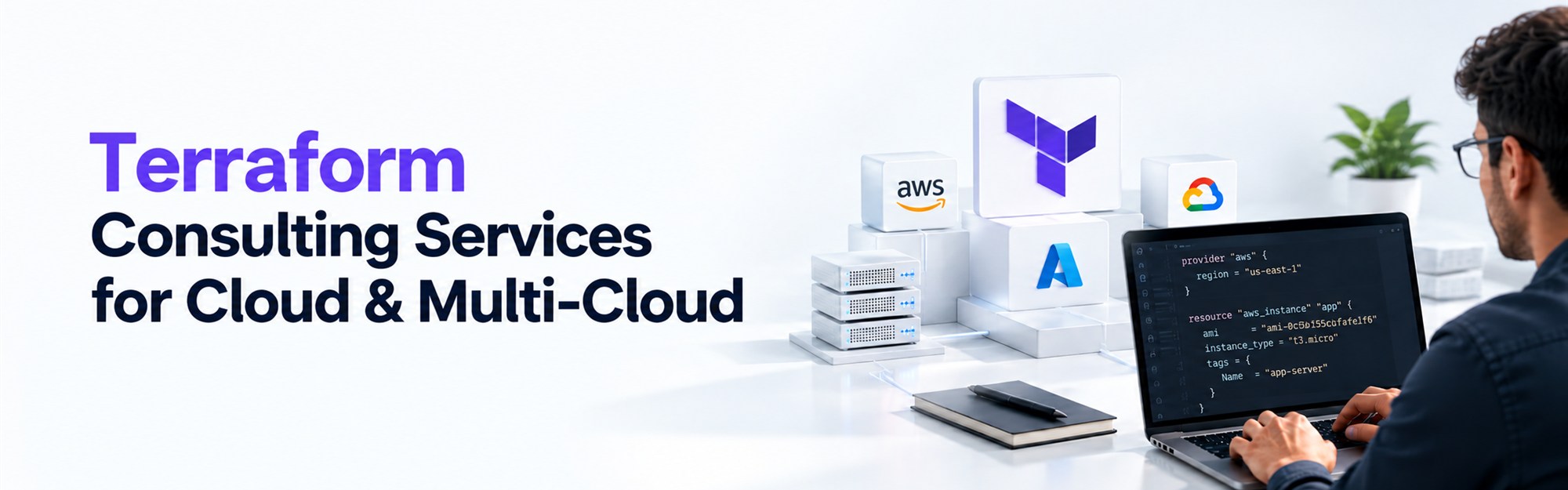
Managing cloud infrastructure by hand works until it doesn't. A few servers become dozens, one environment becomes four, and eventually nobody is quite sure how production differs from staging.
Terraform, an open-source tool originally created by HashiCorp, addresses this by letting teams describe their infrastructure in code. This approach is called Infrastructure as Code (IaC), and it has become standard practice because it makes cloud environments repeatable, reviewable, and easier to scale.
Getting Terraform right still takes planning. Module structure, state handling, and access controls all affect how manageable your setup will be a year from now. That is where Terraform consulting services help. Infotiqq.com is a technology company that provides Terraform, DevOps, and cloud infrastructure services, and this guide explains what that kind of support involves.
Understanding Terraform and Infrastructure as Code
Terraform provisions and manages infrastructure from configuration files. Instead of clicking through a cloud console, you write down what you need, such as networks, servers, databases, and storage, and Terraform builds it.
A few core ideas are worth knowing:
- Infrastructure as Code: infrastructure is defined in text files that can be stored, reviewed, and reused like application code.
- Infrastructure provisioning: Terraform reads your configuration and creates the matching resources through cloud provider APIs.
- Infrastructure automation: steps that once required manual work run the same way every time.
- Reproducible environments: the same configuration can build development, testing, and production setups, with variables handling the differences.
- Configuration and state: the configuration describes what you want. The state file records what Terraform has actually built, so it can calculate what needs to change. Protecting that state file, usually with remote storage and locking, is one of the most important design decisions.
Terraform is mainly a provisioning tool. Configuration management tools such as Ansible typically handle software setup inside servers, and the two are often used together.
The business payoff is cloud infrastructure consistency. When environments come from the same code, surprises drop and troubleshooting gets simpler.
Why Businesses Need Terraform Consulting Services
Terraform is approachable at first and tricky at scale. Teams often start with a few configuration files and later find themselves with duplicated code, tangled dependencies, and unclear ownership.
Experienced consultants help organizations address:
- Cloud infrastructure complexity: designing a structure that stays readable as it grows.
- Automation requirements: deciding what to automate first and how.
- Scalability and standardization: building reusable modules so teams follow the same patterns.
- Faster provisioning: cutting the time it takes to stand up new environments.
- Reduced manual configuration: removing error-prone console work.
- Collaboration: giving developers and operations staff a shared, reviewable workflow.
- Security and governance: setting access rules, secrets handling, and approval steps from the start.
A good consultant does more than write code. They help define a Terraform strategy that fits your teams and risk tolerance. Infotiqq.com offers Terraform-related consulting and cloud infrastructure services for organizations at different stages of that journey.
What to Look for in a Terraform Consulting Company in India
If you are searching for a Terraform consulting company India businesses can rely on, the technical fit matters more than the location. Here is what to evaluate:
- Terraform expertise: ask about module design, state management, and testing practices.
- Cloud platform experience: look for hands-on work with the platforms you use, such as AWS, Azure, or Google Cloud.
- DevOps knowledge: Terraform rarely works alone, so CI/CD and delivery experience count.
- Automation capabilities: they should be able to automate beyond initial provisioning.
- Security practices: ask how they handle secrets, permissions, and reviews.
- Migration and multi-cloud experience: both bring specific challenges.
- Integration capabilities: your infrastructure code should connect with existing tools.
- Scalability and long-term support: infrastructure changes constantly, so ongoing guidance is valuable.
Infotiqq.com provides Terraform and DevOps services and can be considered alongside other providers on these criteria. Whoever you choose, ask for a clear scope and a walkthrough of how they would approach your environment.
Terraform DevOps Consulting Services for Modern Infrastructure
DevOps aims to bring development and operations together around shared, automated workflows. Terraform fits naturally, because it brings infrastructure into the same process as application code.
Terraform DevOps consulting services typically focus on:
- CI/CD integration: running Terraform checks and plans automatically in your pipeline.
- Version-controlled infrastructure: storing configurations in Git so every change has a history.
- Infrastructure testing: using validation, linting, and policy checks before changes are applied.
- Deployment automation: provisioning infrastructure alongside application releases.
- Environment management: keeping development, staging, and production aligned.
- Collaboration and standardization: establishing conventions all teams can follow.
Terraform complements other DevOps tools instead of replacing them. Jenkins or GitHub Actions can run the pipeline, Docker and Kubernetes can handle workloads, and Terraform can create the environment underneath. Infotiqq.com helps organizations fit Terraform into that wider DevOps strategy so it becomes part of everyday delivery rather than a separate task.
Terraform Migration Services for Cloud Transformation
Many organizations already have infrastructure that was built manually or managed with other tools. Moving it under Terraform control is possible, but it deserves care, since mistakes can affect live systems.
Terraform migration services usually follow these stages:
- Infrastructure assessment: inventory what exists and how it is used.
- Existing infrastructure analysis: identify dependencies, undocumented changes, and risks.
- Migration planning: decide the order, priorities, and rollback options.
- Terraform configuration development: write code that reflects the desired setup.
- State management: import existing resources into Terraform state carefully.
- Environment mapping: match code to development, testing, and production environments.
- Validation and testing: confirm that plans show no unexpected changes.
- Deployment planning: schedule changes to limit disruption.
- Post-migration support: help teams adopt the new workflow.
Rushing this process is where problems start. A phased approach, often beginning with lower-risk environments, helps maintain reliability. Infotiqq.com can support organizations with Terraform migration requirements, from assessment through post-migration guidance.
Terraform Solutions for Healthcare Organizations
Healthcare technology teams work under strict expectations for security, privacy, and reliability. Terraform solutions for healthcare can help by making infrastructure more consistent and auditable, though they do not replace a proper compliance program.
Infrastructure as Code supports several healthcare priorities:
- Security and access control: permissions and network rules are defined in code and reviewed before deployment.
- Consistency: standard templates reduce configuration drift between environments.
- Auditability: version history shows who changed what, and when.
- Reliable deployments: repeatable processes lower the risk of manual errors.
- Scalability: environments can grow with demand.
To be clear, Terraform does not make an organization compliant with any particular regulation. Compliance depends on policies, controls, and operational practices. What Terraform offers is a disciplined way to apply and document infrastructure decisions. Infotiqq.com can support healthcare organizations with Terraform and cloud infrastructure needs, working within the security and governance requirements their teams define.
Terraform-Based Multi-Cloud Management
Many organizations use more than one cloud, whether for resilience, cost, regional needs, or acquired systems. Each provider has its own console, terminology, and quirks, which makes consistency hard.
Terraform-based multi-cloud management offers a common infrastructure-as-code workflow across providers. Teams can:
- Use one language and process for resources on different platforms
- Build reusable configurations and modules
- Standardize environments across clouds
- Manage provisioning from a central, version-controlled codebase
- Gain better visibility into what exists and where
Terraform does not erase the differences between cloud providers. A virtual network on one platform is still configured differently from another, and you will still need provider-specific knowledge. What Terraform provides is a consistent way of working, so teams do not have to learn a different process for every platform.
Key Benefits of Using Terraform for Cloud Infrastructure
Infrastructure Automation
Terraform replaces repetitive console work with code. Teams spend less time on routine setup and more on improvements.
Consistency Across Environments
When development, testing, and production come from the same configuration, differences become deliberate rather than accidental.
Scalability
Modules can be reused and adapted, so adding a new environment or region does not mean starting from scratch.
Version Control and Collaboration
Infrastructure code lives alongside application code. Teams can propose, review, and discuss changes through pull requests.
Improved Infrastructure Visibility
Definitions written as code are easier to read, review, and track than settings scattered across consoles.
How Terraform Fits Into a Modern Cloud and DevOps Workflow
A realistic workflow looks like this:
- Define requirements: teams agree on what infrastructure is needed.
- Write configuration: engineers create Terraform code for those resources.
- Use version control: the code is stored in a Git repository.
- Review changes: teammates check the proposal before it moves forward.
- Validate and plan: Terraform checks the code and previews exactly what will change.
- Apply approved changes: after sign-off, the plan is executed.
- Monitor and maintain: teams track the infrastructure and watch for drift or issues.
- Repeat: future changes follow the same controlled path.
The "plan" step is especially useful. It shows the effects of a change before anything happens, which builds confidence and reduces surprises.
Why Choose Infotiqq.com for Terraform and DevOps Services?
Infotiqq.com provides Terraform, DevOps, cloud infrastructure, migration, and automation services. Businesses working with a provider like this can expect support in areas such as:
- Terraform consulting and architecture guidance
- Infrastructure automation
- DevOps integration
- Cloud migration support
- Multi-cloud infrastructure management
- Infrastructure optimization
- Custom infrastructure solutions
- Ongoing technical guidance
The right engagement depends on your goals. Some organizations need a short review of an existing setup, while others want help building an entire infrastructure-as-code practice. A first conversation about your environment is usually the best way to determine what fits.
How to Get Started With Terraform Consulting
You can prepare before any code is written:
- Define infrastructure requirements: list what you need to run.
- Review your cloud environment: document what already exists.
- Identify manual processes: these are often the best automation candidates.
- Determine migration needs: decide what should move under Terraform and in what order.
- Select target platforms: confirm which clouds you will use.
- Establish security and governance requirements: set expectations for access, approvals, and auditing.
- Plan Terraform architecture: consider module structure, state storage, and environment layout.
- Define priorities: pick the outcomes that matter most.
- Start with a pilot: choose a contained project to learn from.
- Expand gradually: extend what works to other teams and environments.
Conclusion
Infrastructure as Code has changed how organizations manage the cloud. Terraform makes infrastructure repeatable, reviewable, and easier to scale, and it gives teams a controlled way to introduce change.
Professional guidance helps you avoid common pitfalls and build something maintainable. Whether the goal is automation, migration, healthcare infrastructure, or working across several clouds, the same principles apply: consistency, clear ownership, and careful change management. If you are exploring these areas, Infotiqq.com can help you assess your environment and plan a practical path forward.
Frequently Asked Questions
Terraform consulting services help organizations plan, build, and manage infrastructure using Terraform. They typically include architecture design, configuration development, automation, migration support, and best-practice guidance, so teams can manage cloud resources consistently, securely, and with less manual effort.
A Terraform consulting company assesses your infrastructure, designs a Terraform structure, writes and reviews code, and integrates it with your DevOps workflows. It can also help with migration, security practices, and team training. A Terraform consulting company India businesses choose should also offer dependable ongoing support.
Terraform lets businesses define infrastructure as code, which makes environments consistent, changes reviewable, and provisioning faster. It reduces manual configuration errors and supports collaboration through version control. It also works across many cloud providers, which suits organizations that expect their infrastructure needs to grow.
Terraform migration services help organizations move manually managed or differently managed infrastructure into Terraform. They typically cover assessment, planning, configuration development, state import, testing, and deployment. Careful planning matters because the goal is to gain control without disrupting live systems.
Terraform helps healthcare teams standardize configurations, apply access rules consistently, and keep a version history of infrastructure changes. Terraform solutions for healthcare support security and auditability goals, but Terraform alone does not guarantee compliance. Policies and operational controls remain essential.
Terraform-based multi-cloud management means using Terraform to provision and manage resources across multiple cloud platforms through one infrastructure-as-code workflow. It offers consistent processes and reusable configurations, though provider-specific differences still exist and require platform knowledge.
Terraform brings infrastructure into the DevOps lifecycle by treating it as version-controlled code. It can run inside CI/CD pipelines, automate environment creation, and support review and testing. Terraform DevOps consulting services help teams connect it with tools such as Git, Jenkins, and Kubernetes.
A consulting partner brings experience with common pitfalls, such as poor state handling, tangled modules, and weak access controls. They can speed up adoption, set sound standards, and train your team. This is especially useful when working with Terraform consulting services for migrations or multi-cloud projects.




